Middle East Crisis: Contained Disruption, Not a Structural Shift

06.03.2026 Market Views Opportunistic Macro Insights

Why we see limited impact on private markets and portfolios

1 / 7

Executive Summary

  • Middle East tensions have lifted near term volatility, but we expect the impact to be temporary, and our macro, rates, and private markets outlook to remain unchanged.

  • Portfolio exposure is minimal. Middle East represents c. 0.15% of our AuM, with no expected material impact on portfolio companies. Please see this section for further details.
  • Private markets remain well positioned. Valuation gaps are wide, leverage is low, borrowing costs have eased, and exit activity and distributions are recovering.

  • Our base case remains intact. Constraints on escalation, ample oil market buffers, and incentives to avoid prolonged disruption argue against structurally higher energy prices.

  • Downside risks are regionally differentiated, with Europe and China more exposed than the U.S. due to higher commodity reliance from the region.

  • Long-term themes are reinforced. Recent geopolitical developments strengthen the case for resilient energy infrastructure and sustained defense investment globally.
 
2 / 7

Recent Developments and Our Assessment

The recent escalation in the Middle East has significantly increased geopolitical uncertainty and triggered short term volatility across global markets, particularly across the energy complex – Brent crude is up c. 25% and European gas prices have risen nearly 65%1. While the situation remains fluid, the economic footprint of the region is limited: Iran represents just c. 0.4% of global GDP while Middle East economies account for c. 4.3%.2

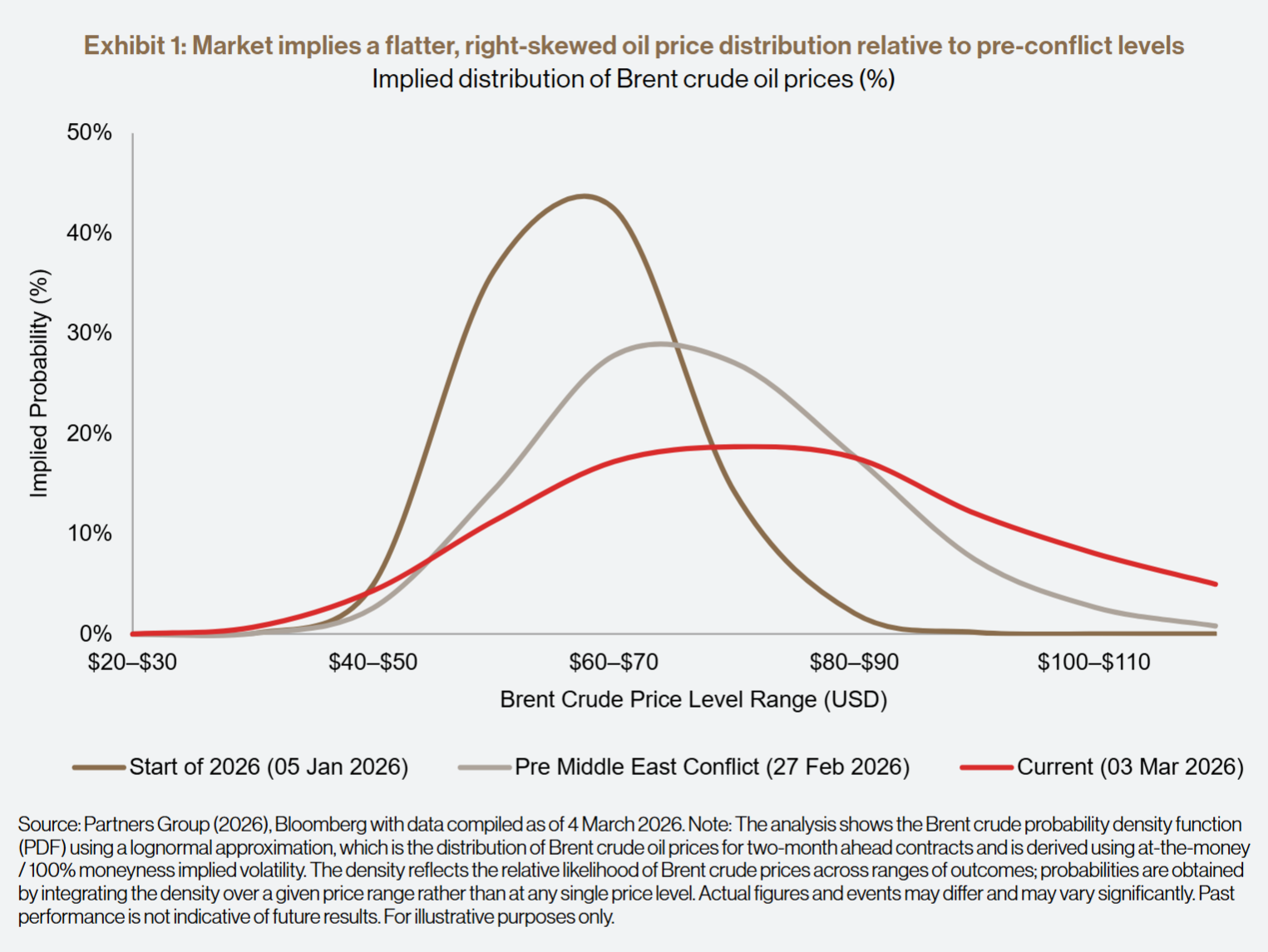
Markets, however, are increasingly focused on the risk of energy supply disruptions and potential price shocks that could have ramifications across global economies. This is reflected in a flatter, right-skewed oil price distribution relative to pre-conflict levels3 (Exhibit 1), signaling a greater perceived upside risk to energy prices and potential global spillovers.

Our assessment is that the sharp moves in oil and gas prices largely reflect a temporary geopolitical risk premium and passing supply constraint, rather than a fundamental shift in global supply-demand dynamics.

Looking ahead, our base case is that disruptions to energy flows—and therefore, to a large extent, prices—will be temporary. As a result, we do not expect material changes to our outlook for growth, inflation, or central bank policy (See this section for more). We continue to expect the positive combination of fiscal and monetary support, alongside emerging AI driven productivity gains, to underpin economic activity and private markets in 2026 – as outlined in our 2026 Private Markets Outlook and Q1 2026 Private Markets Chartbook.

That said, we remain mindful of tail risks. A more prolonged conflict – particularly one that results in sustained damage to regional production infrastructure or extended disruption to key transit routes – could have more meaningful regional and macroeconomic consequences (See this section for more). These scenarios are not our central expectation, but they frame the key risks we are monitoring closely as events continue to evolve.

3 / 7

Our Base Case: Temporary Disruption, Not a Structural Shift

Our base case is that the current surge in energy prices reflects a temporary passing supply constraint, rather than a lasting supply shock. While uncertainty remains elevated, several factors argue against a structurally higher oil or gas cost curve.

The conflict is constrained – Iran’s ability to sustain a prolonged military escalation appears limited, given finite missile stockpiles, degraded command and control capabilities, and the overwhelming military dominance of Israel and the U.S. Past episodes – notably the 1988 Tanker War and the June 2025 Israel-Iran conflict – suggest that, once Iran’s ability to impose costs diminishes, pressure builds quickly for de-escalation rather than escalation.

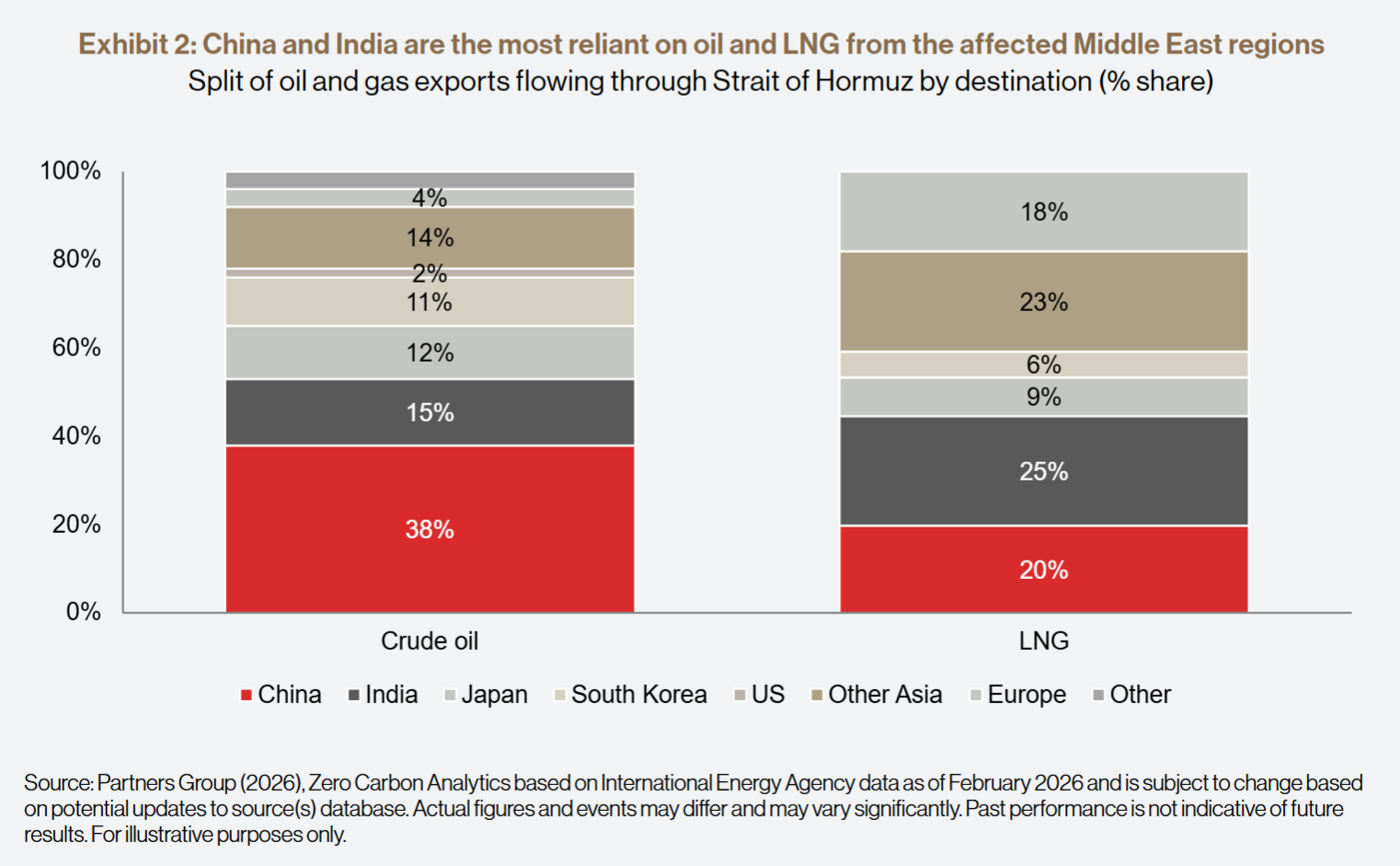
A prolonged closure of the Strait of Hormuz remains unlikely – A sustained shutdown would impose outsized costs on Iran and create strong incentives for external intervention. The U.S. has the capacity and precedent to escort commercial shipping, while China also has a strong interest in avoiding prolonged disruption, given that around 50% of its oil imports transit the Strait4.

The oil market entered this shock with buffers – The market was already expected to be in a surplus in 2026 (c. 3.8 million barrels per day (mb/d)), with global inventories at 477 million barrels, surpassing its five-year average for the first time since 2021. OPEC spare capacity is estimated at 3.9 mb/d5. Strategic and commercial reserves – including around 1.2 billion barrels held by China6 – provide a meaningful cushion against short lived disruptions.

Energy prices may remain volatile in the near-term, but accounting for these mitigating factors, we currently see it as unlikely that oil and LNG prices reset structurally higher. More severe outcomes involving sustained infrastructure damage or prolonged transit disruptions remain non-base case scenarios, discussed below.

4 / 7

If the Conflict Extends: Key Downside Risks

While not our base case, a more prolonged or intensified conflict – particularly one involving sustained damage to energy infrastructure or extended disruption to key transit routes – would have more meaningful macro and market implications. In such a scenario, the impact would diverge by region and be felt primarily through higher energy prices, weaker confidence, and tighter financial conditions.

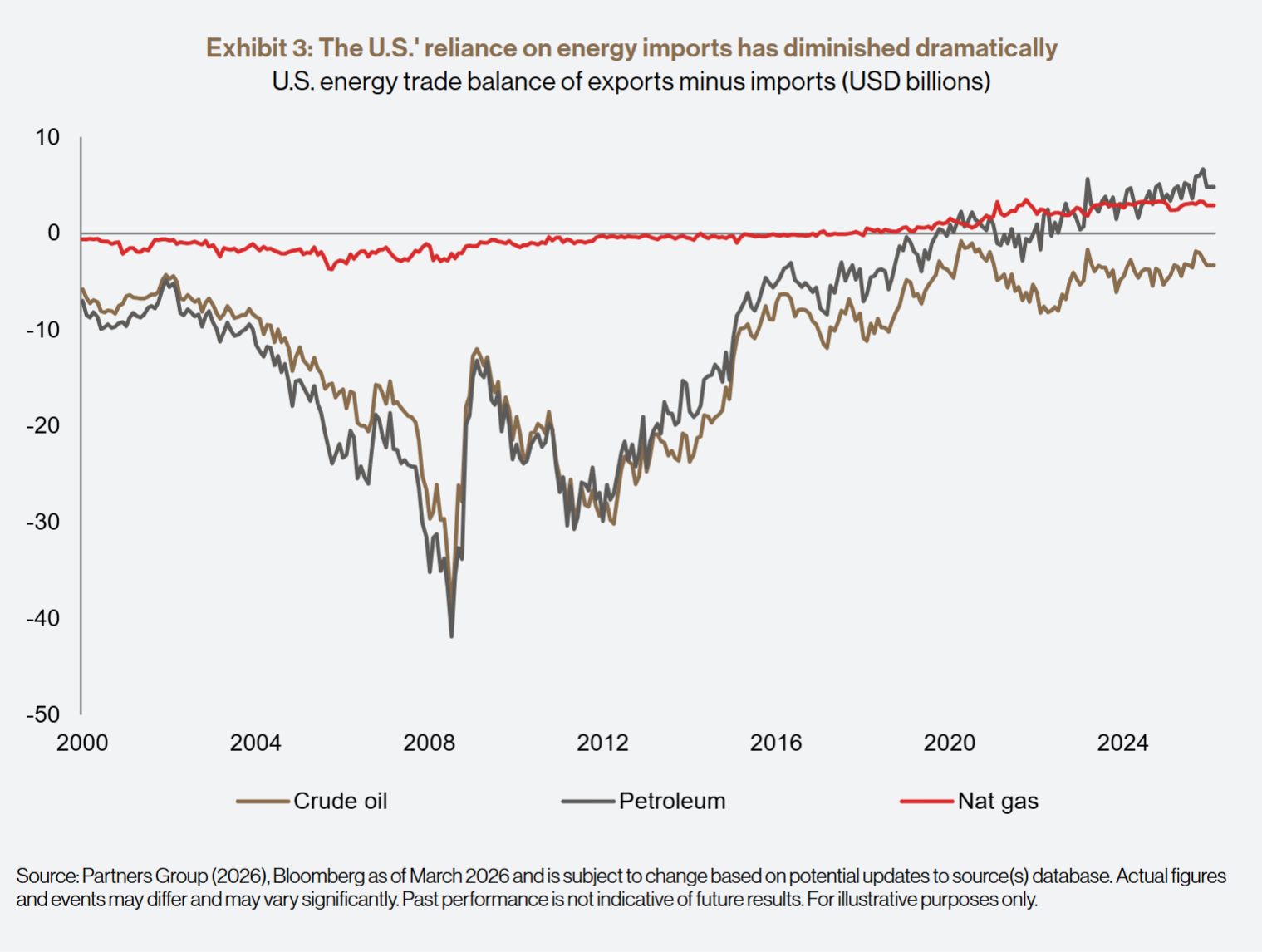
The U.S. is relatively insulated given domestic production and shale flexibility, limiting the direct growth impact of higher oil prices. The primary transmission channel would likely be through consumer and market sentiment. First, the perception of higher gasoline prices could dent confidence and increase affordability concerns. Second, if oil prices were to keep surging, the resulting risk-off market sentiment and equity declines could further weigh on consumer and corporate confidence.

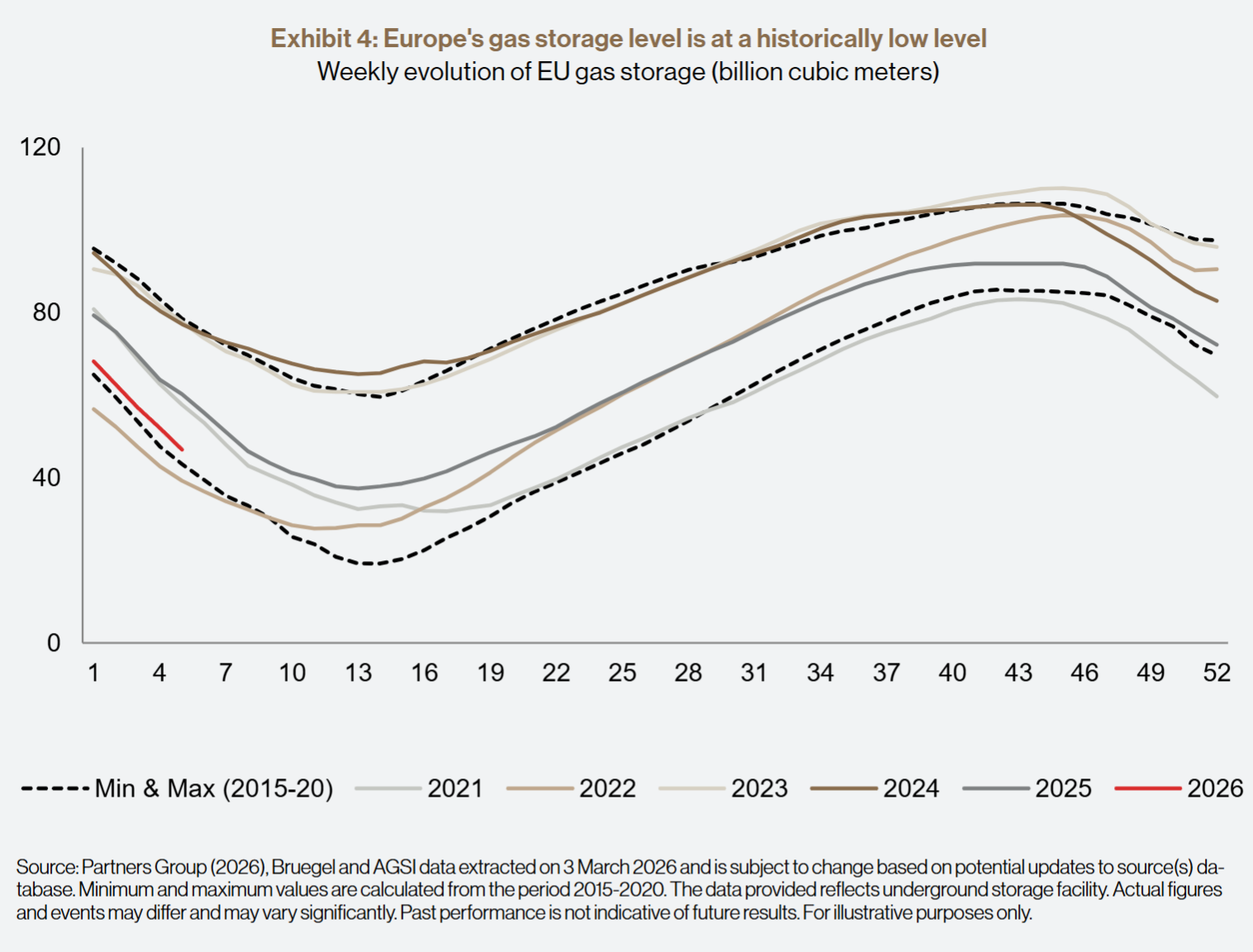
Europe is more exposed due to its greater reliance on LNG and lower flexibility in gas supply, particularly during the storage refill season – with current storage levels remaining historically low. That said, Europe’s sourcing of LNG from the Middle East is low, with nearly 60% of imports coming from the U.S. and only around 8% from Qatar.7 Even so, a sustained disruption could result in a higher inflation pass-through, renewed pressure on energy-intensive industries, and a challenge to the region’s nascent 2026 growth recovery. Europe has, however, previously demonstrated a willingness to deploy subsidies and price caps to help dampen the impact of higher energy prices on households and businesses.

China is the most strategically exposed major economy given its reliance on energy flows through the Strait of Hormuz. However, strategic reserves, diversified import sources, and lower oil intensity provide buffers against short-term disruption. A prolonged shock would be more likely to affect margins, external demand, and confidence, rather than trigger an immediate macro dislocation. For emerging markets more broadly, the impact would depend on energy import dependence and fiscal space, with net exporters benefiting and importers facing renewed pressure on growth and external balances.

Overall, while a prolonged escalation would present more meaningful regional challenges, such outcomes remain non-base-case scenarios. We continue to monitor developments closely, but under our current assessment, the balance of risks does not warrant a change to our broader macro or investment outlook.

5 / 7

Looking Through Volatility: Rates and Markets

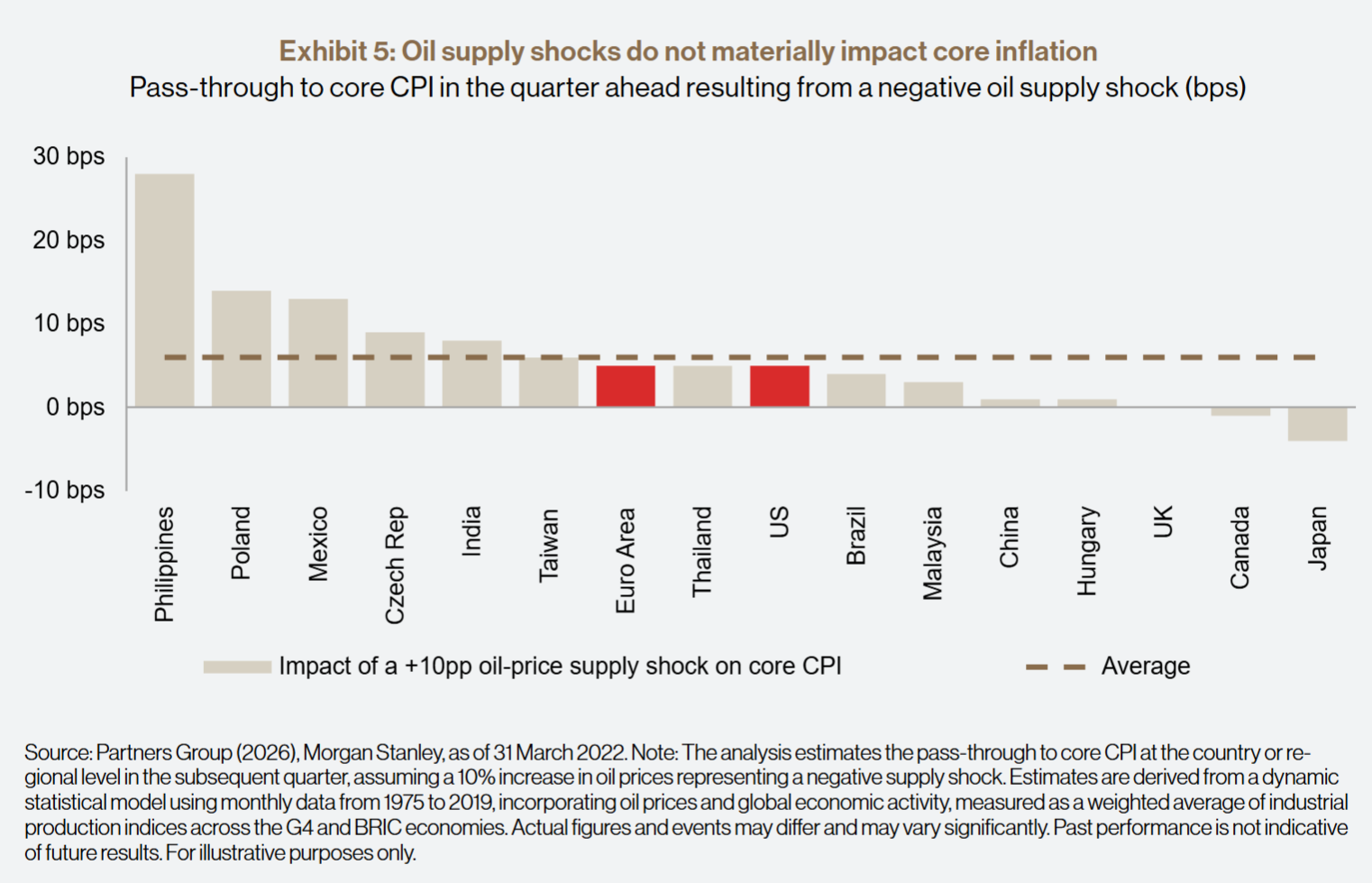
Markets have priced out around 15 bps of rate cuts in the U.S. for 2026 and are now assigning a non-zero probability of rate hikes in Europe8. Despite this, we do not believe the current commodity shock is sufficient to alter central bank policy paths. Oil price shocks tend to have a limited and short lived impact on core inflation, particularly given that the U.S. and Europe are structurally less oil intensive than in past decades.

Today, a 10% increase in oil prices leading to a supply shock would, all else equal, lift core CPI across the U.S. and Europe by roughly 5 bps over the following quarter (Exhibit 5)9. In other words, the bar for oil prices to materially shift the policy trajectory is high. While policymakers dialogue and tone may shift at the margin, we believe it would require a sustained surge in energy prices – one where inflation expectations become unanchored – before policymakers would be unable to look through the move. For now, market-based inflation expectations remain broadly anchored at around 2%, consistent with central bank targets.10
The more meaningful risk, in our view, would be through consumer sentiment and the potential knock-on effect that may have on consumption, should higher energy prices persist. In such a scenario, energy costs would act as a “consumption tax,” weighing on growth and ultimately arguing for more easing, not less.

That said, under our base case, our rate expectations remain unchanged. For the Fed, we continue to expect 50 bps of rate cuts in 2026. For the ECB, we see scope for 0-25 bps of cuts in 2026, with our view adjusted modestly from earlier expectations, reflecting improved growth momentum from German fiscal stimulus rather than developments related to the Middle East.

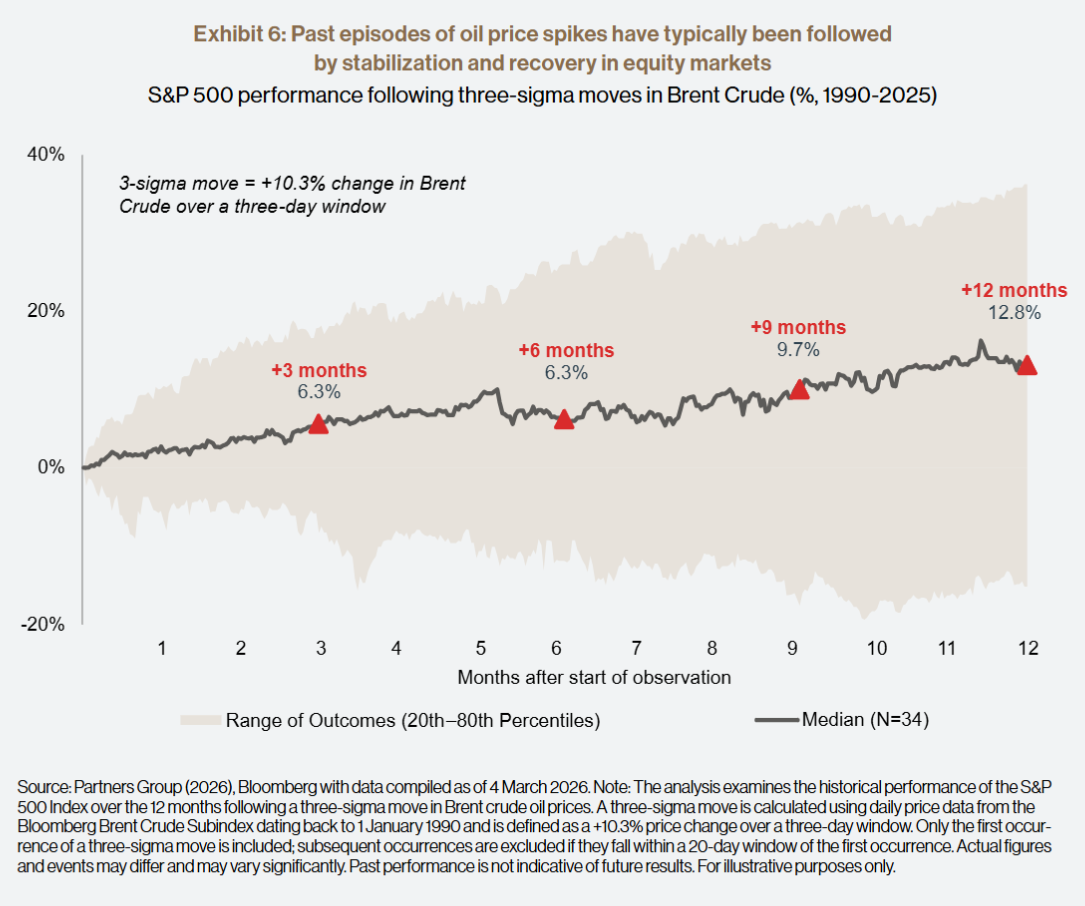
Looking beyond near term volatility, history suggests that markets tend to look through geopolitical driven energy shocks. Past episodes of sizable11 oil price moves have typically been followed by stabilization and recovery in equity markets over subsequent months. Indeed, the median returns for the S&P 500 over the subsequent one- and three-month periods have both been positive (Exhibit 6)12.
Taken together, recent developments reinforce our view that near term uncertainty does not derail the broader macro backdrop or our long-term investment themes, and that disciplined, forward looking positioning remains appropriate.

6 / 7

Limited Direct Impact on Our Portfolio and Private Markets

Across our platform, we see limited direct impact from recent developments in the Middle East. Our exposure to the region is minimal – approximately 0.15% of AuM, de minimis across our private equity and infrastructure portfolios – and we do not expect the current situation to have a material direct effect on portfolio companies at this stage. Within our private equity directs portfolios, ten companies have some activities in the Middle East. However, for these companies the region represents less than 5% of EBITDA on average, resulting in indirect EBITDA exposure to the region of less than 0.75% across our portfolio.

More broadly, private markets remain well positioned to navigate near-term volatility. Valuation gaps relative to public markets are at their widest levels in 15 years, leverage remains at historical lows outside of the Global Financial Crisis and borrowing costs have retraced 80% from post COVID peaks13. As a result, exit activity and exit premiums are recovering, distributions are increasing, and capital markets activity is expected to rebound further, pointing to greater exit activity ahead. Against this backdrop, and given our unchanged macro and rates outlook, we remain constructive on private markets and do not see recent geopolitical events altering the medium-term investment opportunity set.

7 / 7

Long‑Term Themes Reinforced

Recent developments further reinforce several of our key long-term investment themes, most notably the importance of secure, affordable, and resilient energy infrastructure, as well as a sustained increase in defense spending across the U.S., Europe, and Asia.

The current conflict in the Middle East highlights the fragility of global energy chokepoints, strengthening governments’ focus on mission critical energy infrastructure, including grid resilience, energy security, and diversification of supply – areas where our infrastructure platform is actively invested. At the same time, defense is emerging as a multi-year investment theme, driven by heightened geopolitical tensions, rising military budgets across NATO and its allies and APAC economies, and increased focus on technological modernization. We highlighted the breadth of private markets opportunities in aerospace and defense in our Q1 2026 Private Markets Chartbook, and recent events are likely to further reinforce long-erm investment demand in this space.

In conclusion, while the Middle East conflict has raised near-term uncertainty, we see the impact as temporary and our macro, rates, and private markets outlook unchanged. Strong structural buffers and reinforced long-term themes – particularly resilient energy infrastructure and sustained defense investment – support the durability of the opportunity set. Against this backdrop, maintaining a focus on fundamentals and disciplined long-term positioning remains the most effective course.

Investment Strategy Office

Andrei Vaduva

Anastasia Amoroso

Managing Director and Chief Investment Strategist

Andrei Vaduva

Fiona Gillespie

Senior Macro Strategist

Andrei Vaduva

Nicholas Weaver

Vice President, Investment Strategist

Andrei Vaduva

Qian Ren

Associate, Investment Strategy

You are leaving this website

You are about to leave this website and visit an external page.

Please note that PGPE Ltd is not responsible for the content or security of external sites.